
DDA Care Guides for Case Managers, Guardians & Caregivers
Practical, authoritative resources on DDA waivers, ABA-informed residential care, RN delegation, and transitioning a loved one to an adult family home in Washington State.
Get DDA care updates
New guides and placement resources, straight to your inbox.
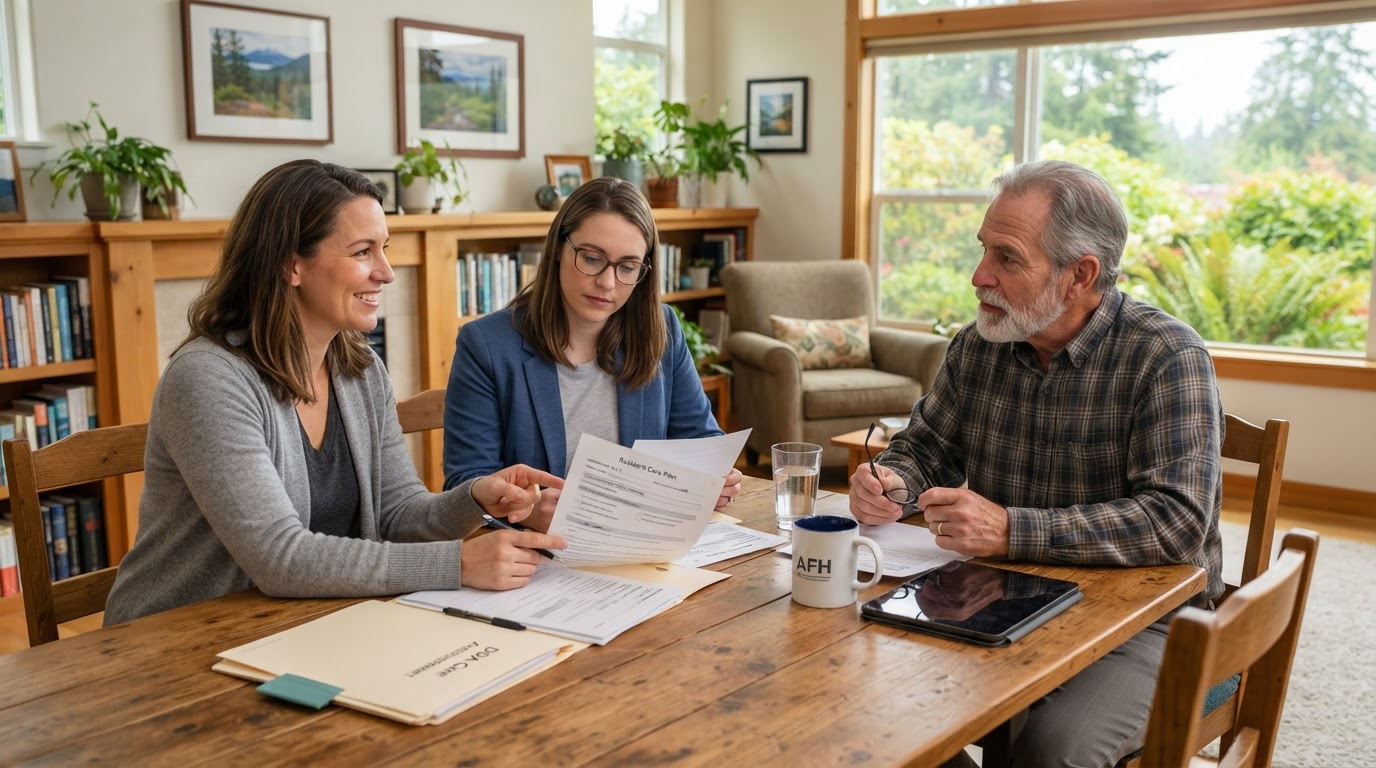
How to Choose a DDA-Certified Adult Family Home in Washington
Selecting the right DDA-certified adult family home means verifying licensing, staffing ratios, behavioral support capacity, and intake responsiveness. Here's the framework case managers and guardians use.

ABA-Informed Care in an Adult Family Home: What It Means
ABA-informed care brings Applied Behavior Analysis principles into daily residential life - not as clinical therapy, but as the everyday language staff use to support positive behavior and reduce triggers.

DDA Waiver Programs in Washington: A Residential Care Guide
Washington's DDA waivers - Core, Individual & Family Services (IFS), and Basic Plus - fund different levels of residential support. Here's how each applies to adult family home placement.
Transitioning a Loved One to Residential Care: A Family Checklist
Moving a loved one into residential care is emotional and logistical. This checklist helps guardians prepare for placement, move-in day, and ongoing communication with the care team.
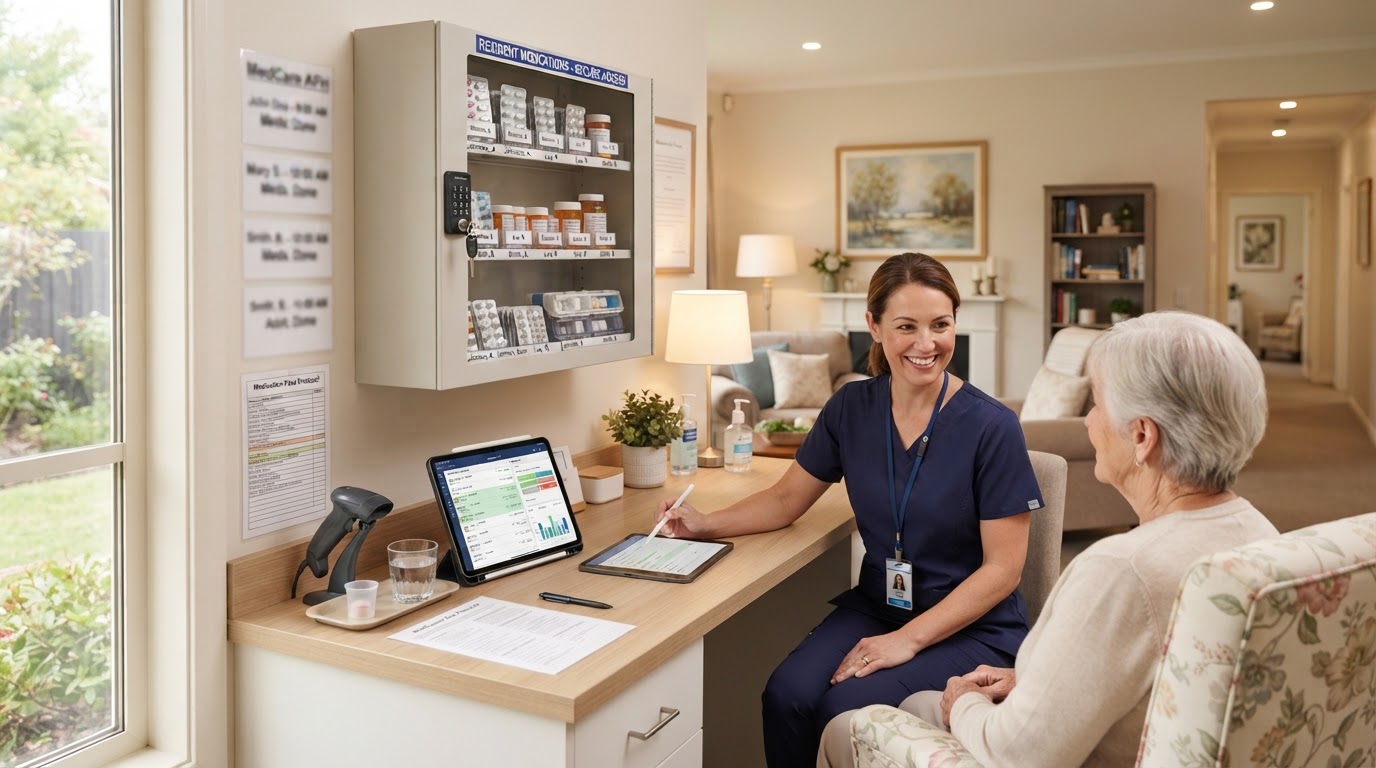
What Is RN Delegation in an Adult Family Home?
RN delegation allows trained adult family home staff to perform certain nursing tasks under a Registered Nurse's supervision - a critical safeguard for residents with complex medical needs.
What Is a Behavioral Support Plan (BSP) in Residential Care?
A Behavioral Support Plan (BSP) is the written roadmap that guides how staff respond to a resident's behavior. Here's what a BSP contains, who develops it, and why faithful daily implementation matters.
Designing a Sensory-Friendly Environment in an Adult Family Home
For many adults with developmental disabilities, the physical environment is care. A sensory-friendly home reduces triggers, lowers anxiety, and makes behavioral support plans more effective.

Community Integration Activities for Adults with Developmental Disabilities
Community integration is not just recreation - it is a developmental and dignity outcome. Here's what meaningful integration looks like in a residential adult family home setting.
Medication Management in Adult Family Homes, Explained
For residents with complex prescriptions, medication management is a daily safety-critical process. Here's how RN delegation, the MAR, and secure storage work together in a licensed adult family home.

Awake Overnight Staffing: Why It Matters in an Adult Family Home
On-call overnight coverage is not the same as awake overnight staffing. For residents with elopement risk, seizures, or nighttime behavioral episodes, the difference is a safety-critical distinction.
Signs It's Time for Residential Care for a Developmental Disability
Deciding when residential care is the right step is one of the hardest calls a family makes. These concrete signs help guardians recognize when a licensed adult family home offers a safer, more supportive path.
Private Pay vs. DDA Waiver: Adult Family Home Cost in Washington
Understanding how residential care is funded removes a major source of family anxiety. Here's how DDA waiver funding and private pay compare, what each covers, and how to plan.

Talking to a Resistant Parent or Loved One About Residential Care
Resistance to residential care is normal and often rooted in fear, not preference. Here's how to approach the conversation with empathy, clarity, and respect for autonomy.
What Does DDA Stand For? Washington's Developmental Disabilities Administration
DDA stands for the Developmental Disabilities Administration, the Washington State agency that funds and oversees services for adults with developmental disabilities. Here's what it does and how it relates to residential care.

Adult Family Home Resident Rights in Washington State
Washington law guarantees specific rights to every adult family home resident. Knowing them helps families advocate confidently and recognize when a provider is - or isn't - meeting its obligations.
How to Prepare for an Adult Family Home Tour: Questions to Ask
A tour is your best chance to evaluate fit. These are the high-value questions that separate a well-run adult family home from one that just looks good on the surface.
Adult Family Home vs. Assisted Living in Washington: What's the Difference?
Adult family homes and assisted living communities serve different needs. For adults with developmental disabilities, the smaller, higher-staff-ratio, DDA-certified AFH model is usually the better fit. Here's the comparison.
How DDA Case Managers Refer Residents to an Adult Family Home
A clear walkthrough of the DDA referral workflow so case managers know exactly what to send, what to expect at assessment and tour, and how placement documentation flows.
Adult Family Home Licensing in Washington (DSHS), Explained
Washington adult family homes are licensed under a specific legal framework. Understanding RCW 70.127 and WAC 388-76 helps case managers and families verify a provider's authority and compliance.
DDA vs. Mental Health Residential Care: What's the Difference?
DDA residential care and mental health residential treatment serve different populations under different funding and regulatory frameworks. Confusing them leads to misplacement. Here's the distinction.
Ready to Explore Placement at Avenue Home?
Submit a DDA referral or schedule a private home tour with our intake coordinator in Puyallup.